Winters in my childhood home or ‘Howrah Bari’ as I still call it, never announced themselves; they crept in. Quietly. Through the sunlight peeping in through the jafri’s on the entrance door wall, through the Venetian windows, through the thin cotton curtains Dida refused to replace, through the ‘Chad er dorja’, through the red cement floors that turned so cold in the mornings that we hopped from one patch of sunlight to another just to avoid the chill. There is something about red-cement floors that speak to me. The stories they weave, the memories they behold – they all feel like the warmest hug.
But the real sign of winter wasn’t the weather. It was Jamma’s tomato soup. Hailing from outside Bengal, Jamma was the benchmark of fancy in our house. The occasional delicacies were mostly courtesy of her. Her tomato soup wasn’t just a recipe. It was a ritual. And every character in our joint family had an unsaid part in it. Comfortably clad in her long sleeved designer sweater (while all the other women of the family were mostly wrapped in their fading shawls), she would religiously announce the advent of winter with her piping hot tomato soup.
Dida, sitting on low wooden pnire, would peel tomatoes with the calm confidence of someone who had been feeding generations without ever touching a cookbook. Dadu on the other hand, who had absolutely no official position in the kitchen, took it upon himself to be quality control. He’d walk in every few minutes with the same line, “noon ta kom dio, shob shomoy beshi hoy.” The salt had never once been “beshi,” but traditions must be respected, even the unnecessary ones.
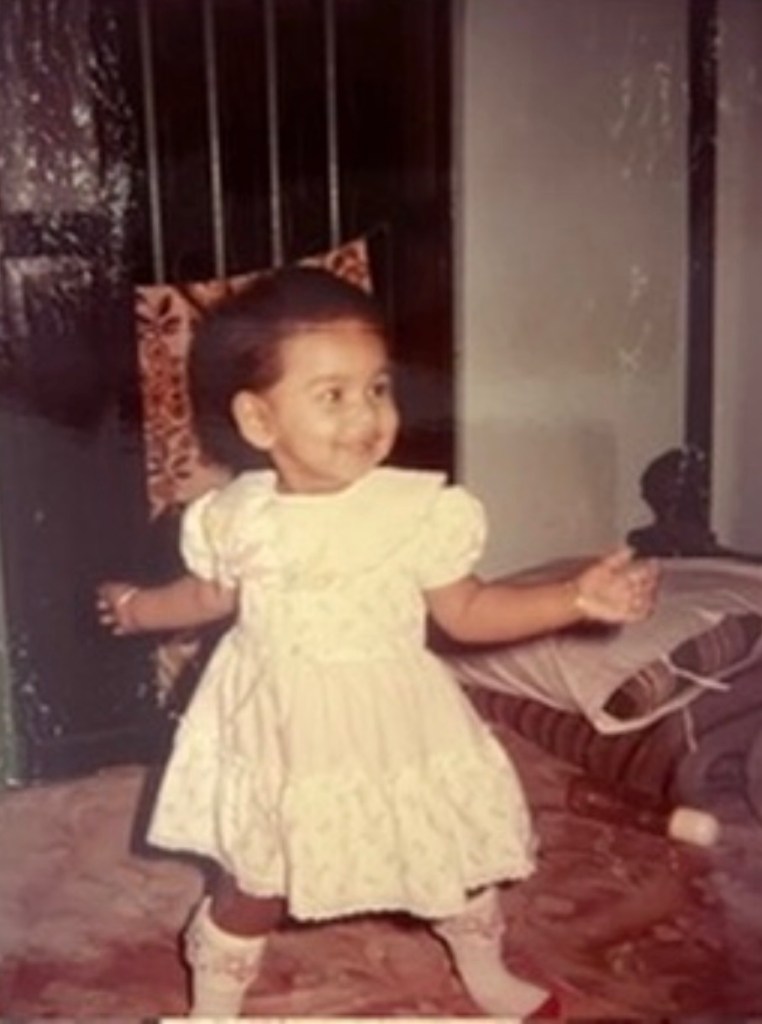
Probably smiling at nothing.
My father — young, exhausted, trying to run a growing business and a large family — would return home late, shirt smelling of machine oil and deadlines. But the moment he stepped into the kitchen doorway and the scent of garlic hit him, something softened.
“Tomato soup banaccho? Besh,” he’d say with a silent smile, as if the soup had already begun repairing the day. And me — small, nosy, bundled in sweaters Ma insisted were warm “because they were wool blend,” though they scratched like sandpaper — I’d sit on the kitchen counter, officially appointed as Jamma’s “taster.” Steam from the ladle fogged my glasses every time she whispered, “Ebar bolo, chini lagbe?” I never knew. But I loved being asked.
And then there was Naw Kaka — my father’s immediate elder sibling, and the most special member of our family. Born as a special child, he was, in every sense, the permanent youngest among us.
He always blew on his soup too dramatically, cheeks puffed, eyes wide, turning a simple act into a family performance. “Shooo, ki gom,” he’d say, in his own sweet language that only we understood. It meant, “Oof, ki gorom!” And before Dida could even respond, one of us cousins would rush over, claiming the honour of cooling his bowl for him — stirring gently, blowing softly, making sure his soup was just right.
He’d grin then, that wide, innocent grin that melted even Dadu’s mock sternness.
Naw Kaka didn’t just drink soup. He made soup time a celebration — a pause in the household where laughter became a kind of prayer.
He was our most favourite person at home — not because he was different, but because he made everything feel lighter, funnier, and infinitely more loving.
By 7 pm, the table filled up — steaming bowls, clinking spoons, and the soft background hum of a house that somehow managed to stay both chaotic and complete. Someone always asked for more, someone always claimed Dida’s ladle wasn’t deep enough, and someone — usually Naw Kaka — would say something that made us all laugh until our soups went cold.
That tomato soup wasn’t just food. It was winter’s love letter to our household. It was the glue, the warmth, the familiar anchor in a house full of shifting dynamics and overlapping lives.
Years later, life looks quieter. The family has scattered across postcodes. The red cement floors have faded under time’s weight.
Dadu’s constant supervising is now a memory we laugh about. Dida couldn’t peel tomatoes at dusk anymore; time had slowed her hands, but her recipes have been passed on.
And me? I now run the family business during the day — drawings, machines, contracts, phone calls — the practical world of metal and motion. But as winter tiptoes in, I find myself back in the kitchen, grounding myself in ritual.
I blanch tomatoes the way Jamma taught me. I sauté garlic until it threatens to brown and the kitchen smells like someone has lit a warm lamp inside the walls. I add that pinch of sugar I never quite understood as a child.

And suddenly, the kitchen fills with that same smell — rich, sweet, slightly tangy — and in that moment, the past folds into the present. I can almost hear Naw Kaka’s dramatic “shooo, ki gom,” followed by our giggles echoing through the hall. I can almost see Dida’s soft smile and my father’s weary nod at the kitchen door. And I can almost feel those red cement floors under my bare feet again — cool, grounding, familiar.
The soup tastes the same. But it feels different now — deeper, quieter, heavier with memory. Back then, it was a shared moment in a loud house. Today, it’s a quiet conversation with the past. Maybe that’s the secret of winter food — it doesn’t just warm the body; it stitches together all the versions of who we’ve been. And maybe, just maybe that’s what growing up really is — learning to stir the past into the present gently enough that it doesn’t spill, but warmly enough that it still heals.
So here’s to tomato soup —
to Dida’s hands and Dadu’s salt lectures,
to my father’s tired eyes softening at the smell of home,
to Naw Kaka’s laughter that still echoes somewhere between “shooo” and “ki gom,”
and to the red cement floors that held us all —
generation after generation, bowl after bowl,
in winters woven with tomato and time.


 Nuchi Nebu Nonka
Leave a Reply