A Quiet Bowl of Bengal, and the Home I Carry Within Me
There are certain dishes you don’t learn from recipes. You absorb them. Like stories. Like weather. Like the quiet rituals of a household that existed long before you learned to cook for yourself.
Muri ghonto is one of those dishes for me. Not something anyone ever sat me down to teach. Not a recipe someone dictated across the kitchen counter. It came to me the way old Bengali food often does – by simply existing in the background of my growing up. By being made and remade in the kitchens of women who never explained what they were doing, but always expected you to understand.
Even now, when I make muri ghonto on an ordinary afternoon, it doesn’t feel like cooking. It feels like placing myself gently into a memory.
It starts with the fish head – the machher matha – a Katla-fish head, large and unwieldy, with its own personality. I dry it carefully the way Ma used to insist. And then I let it fall into the kadhai with hot oil. That first crackle is so distinct, so rooted in our kitchens, that it almost feels like a greeting. A reassurance: You’re doing it right.

I fry it till it’s bronzed and crisp on the edges, then lift it out and keep it aside. Growing up, I always saw the elder women treat the fish head with a peculiar respect – as if it were the eldest member of the family who needed to be consulted last, added last, served last. Habits like that stay with you longer than you expect.
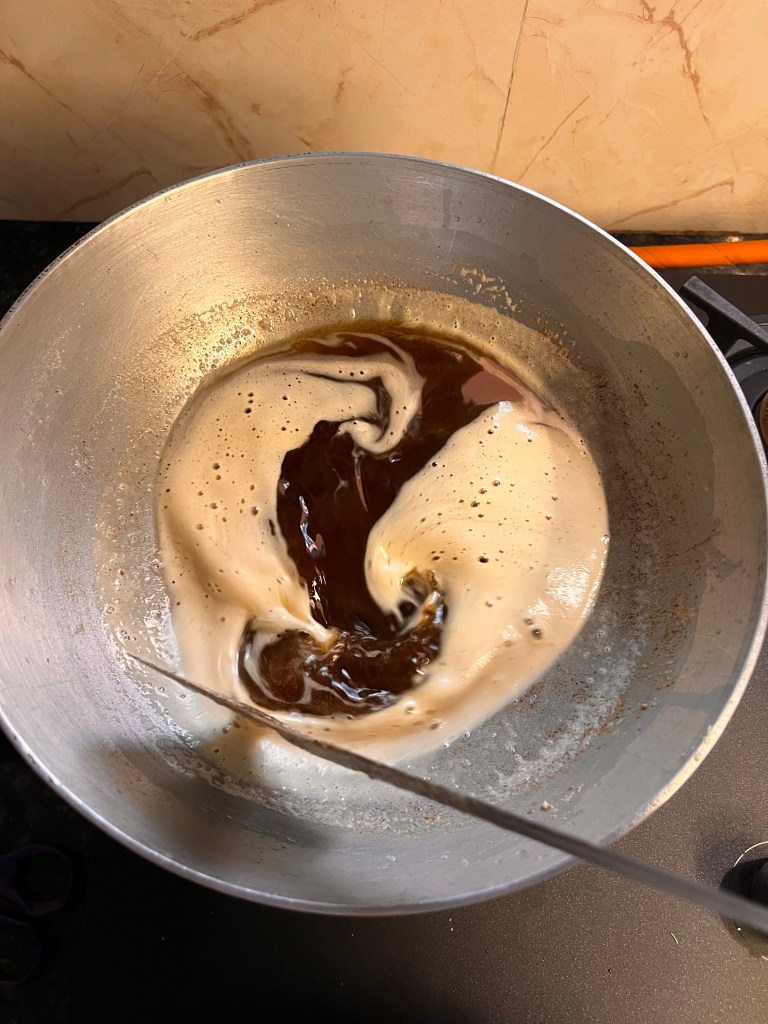
Then begins the part of cooking I love the most. The ghee goes in – a generous spoonful, because my cooking rarely has the heart to be stingy. Shukno lonka, tej pata, whole garam masala. The moment they hit the heat, the fragrance unfurls into the room. I prefer using my homemade ghee. Have not really enjoyed store bought ones ever since I started making my own.
It’s the scent of every winter afternoon meal, of steel plates clattering in old kitchens, of cousins running in and out, of Ma instructing someone on the correct way to wash fish (and the washing it herself that one final time), of conversations that were never profound but somehow still held the home together.
The onions go in next. I slice them thin – not out of technique, but out of habit. They soften slowly, turning the colour of tired gold. I add the tiniest amount of ginger paste and garlic paste (separate, homemade), the kind that almost disappears into the air. I cook it all down till the smell changes – till it feels less raw, less sharp, more settled. That moment when the oil begins to separate feels like a nod of approval from some unseen matriarch.
The rice is always gobindobhog. No substitutions. No experiments. This is one of those dishes where you don’t try to innovate. You just surrender to what it has always been.
I wash the rice lightly beforehand. Not aggressively. Just enough to let it wake up. When I add it to the ghee-soaked masala, the grains cling to the spices like they recognise them. There’s something incredibly tender about that.
Water follows. The simmering begins. The rice floats, sinks, rearranges itself. A quiet choreography.
When the rice is halfway cooked, I bring back the fried fish head. I place it gently, almost ceremoniously, into the pot. Then, with the back of my ladle, I break it. It doesn’t resist. It yields the way things do when they’re meant to belong.
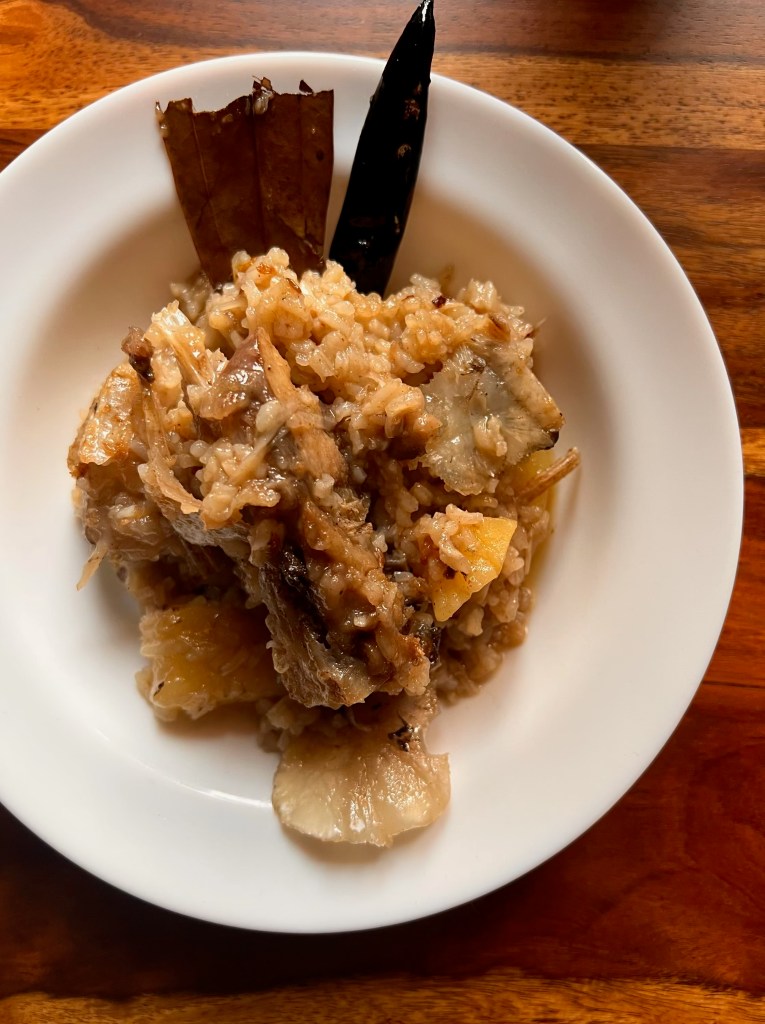
The flavours deepen. The kitchen warms. The smell becomes rounder, fuller, almost like someone humming a tune under their breath.
I let it cook until it reaches that sweet in-between – neither too runny nor too dry. Something that holds its shape on the plate, but still feels like comfort in a spoon.
A final drizzle of ghee. A pinch of garam masala powder. These last touches feel less like cooking and more like love.
And then it’s done. A bowl of muri ghonto. A bowl of my childhood, my present, and the home I keep recreating for myself.
Every time I make it, I’m reminded of how Bengali food has a way of grounding you without asking for much. A fish head, a handful of rice, some ghee, some time. That’s all it takes to feel connected to a lineage of kitchens, of women who cooked before me, of rituals that weren’t written down but lived.
Muri ghonto isn’t special because it’s elaborate. It’s special because it reminds me who I am when the world outside gets too loud. Because in those moments – standing in my own kitchen, stirring a pot of simmering rice and fish head – I feel held.
And in that quiet, homely way, I feel at home again.
 Nuchi Nebu Nonka
Leave a Reply