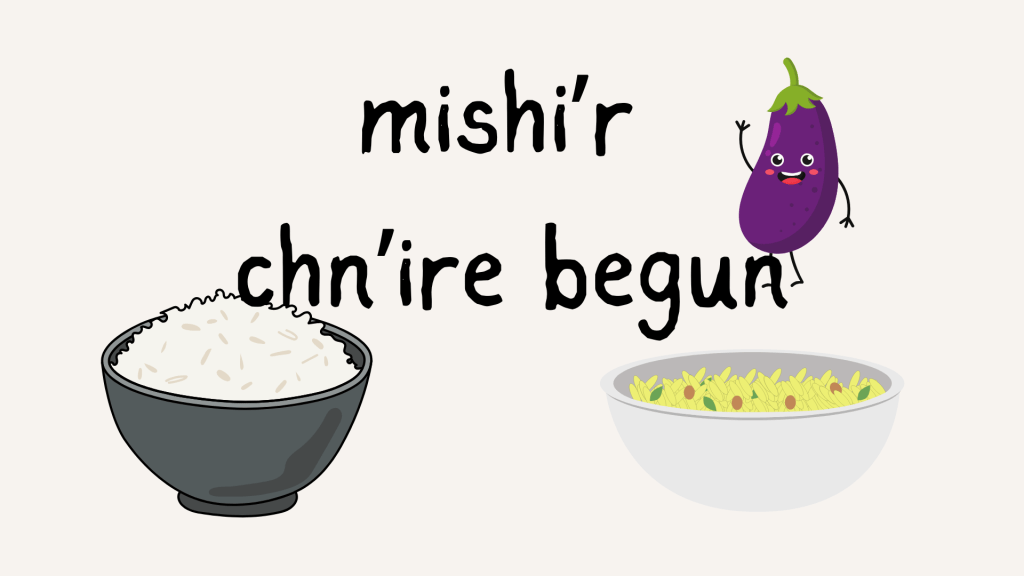
There are recipes that come from books, and then there are recipes that are whispered by a loving family member, or a friend that is carried in memory, in habit, in the way a kitchen smells at a certain hour of the day. Chn’ire Begun belongs firmly to the latter. It is not flashy, not restaurant-worthy in the conventional sense, and certainly not something you will find plated with micro greens and drama. But it is deeply comforting, gently spiced, and rooted in a kind of everyday nostalgia that feels increasingly rare.
I first heard of this dish from Mishi – almost in passing, the way such treasures are often mentioned. Curious as always, I asked her for the recipe, and true to the spirit of home kitchens, she shared her little secret without hesitation. No gatekeeping, no secrecy. Just a quiet passing on of something worth making and holding on to.
This is a dish from the yesteryears – of grandmothers, and storytellers – one that speaks of unhurried mornings, of steel plates and soft sunlight, of meals that were made with instinct rather than measurement. It is simple food, yes, but simplicity here is not a compromise; it is the whole point.
At its heart, this dish is a meeting of textures and restraint. Flattened rice (chn’ire/poha) that is soft but not mushy. Brinjal that is tender but still holds its shape. And spices that are not overpowering but blooming just enough to wrap everything in the warmest embrace. Like most traditional recipes, there is room for interpretation. What follows is how I made it – how it has come to feel right in my kitchen.
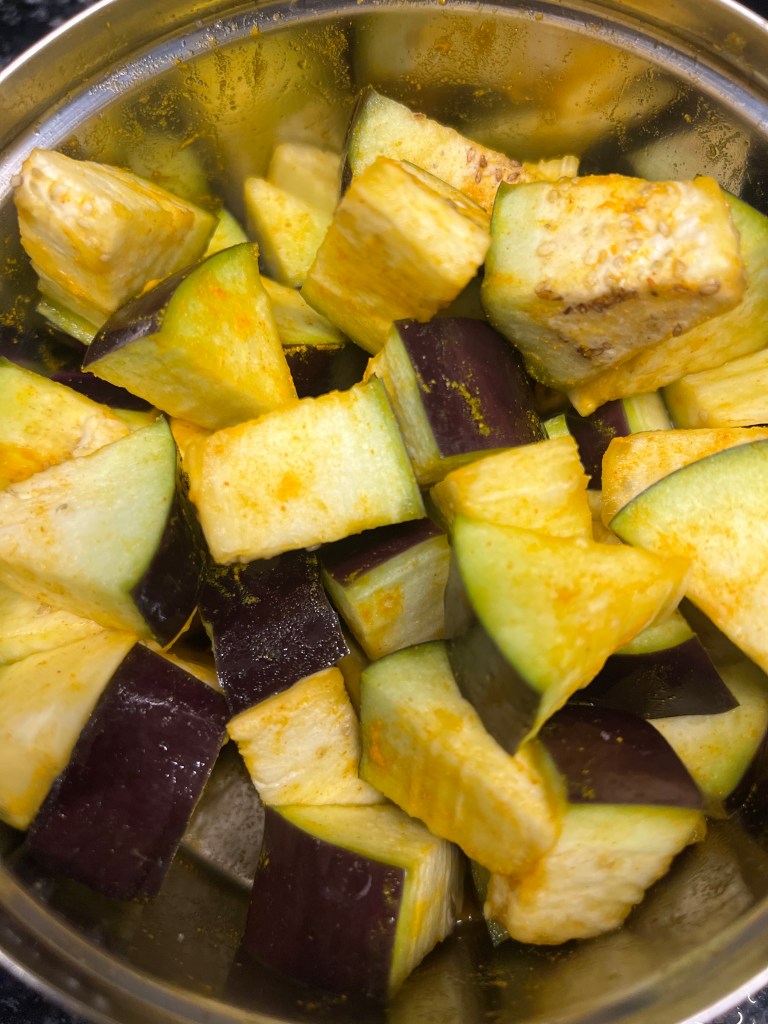
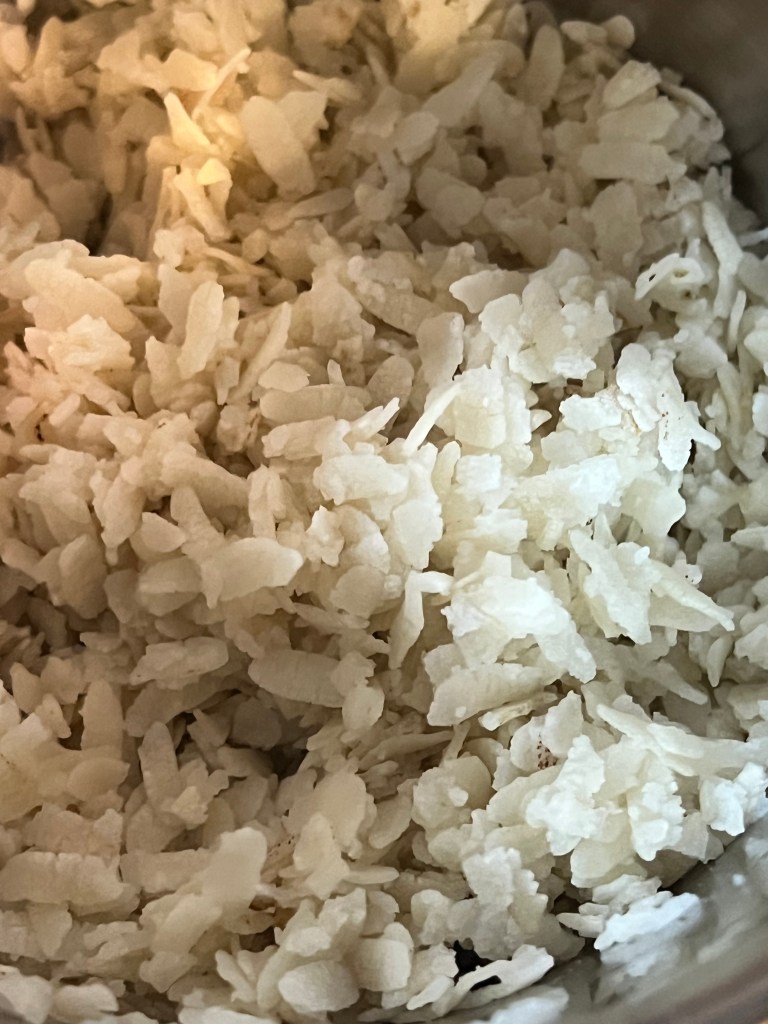
Start with the brinjal. Dice it into medium-sized cubes. Remember the size – not too small, or they will disappear into the dish. Add a pinch of turmeric powder and salt, toss gently, and let it sit for a bit. This small step makes a significant difference- it seasons the brinjal from within. Next comes the chire. Wash it lightly and soak it just enough to soften. The trick here is restraint – you want it hydrated, not soggy. Over-soaked chn’ire will collapse, and this dish deserves better.
Heat a neutral, fragrance-free white oil in a pan. Once warm, add in the brinjal pieces. Fry them the way you would until they are soft, lightly golden at the edges, but still holding themselves together. (I usually cover the pan while frying to ensure less oil consumption.) Remove and set aside. In the remaining oil, begin building the flavour.
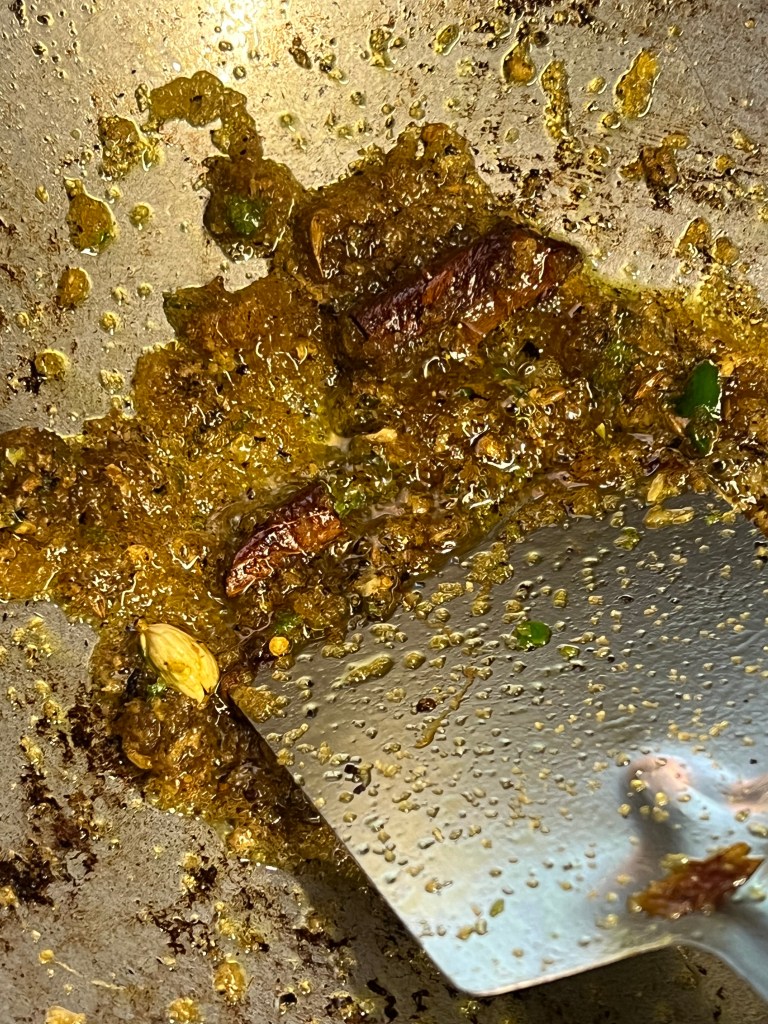
Add a small stick of cinnamon, one tiny green cardamom, and a dash of jeera. Let them temper gently as the aroma should be warm, not aggressive. Then add ginger paste and chilli paste, followed by a bit of ground jeera (homemade if you have it, but any will do). Let this mixture cook until the raw smell disappears and your kitchen begins to smell like something is happening. This is your base. Take a moment here, don’t rush it.
Now add the soaked chn’ire. Toss it in gently so it absorbs all the spices and flavour. You will see it change, each flake taking on colour and warmth. Return the fried brinjal to the pan. Mix carefully with a light hand – you want everything combined, not mashed. Finish with a dollop of ghee and a sprinkle of ground garam masala. Give it one final toss, turn off the heat, and serve immediately.
Mishi likes to add a handful of fried moongphali (peanuts) for a bit of crunch and nuttiness. It works beautifully in the dish. I skip it but not out of principle, just preference. That’s the beauty of recipes like this, they bend easily to the person cooking them.
This is best eaten hot, straight from the pan, when the ghee is still melting into the chn’ire and the spices are at their most fragrant. It doesn’t demand accompaniment in general but can be had with some steaming rice as well; making it just as comforting a part of a full course meal.
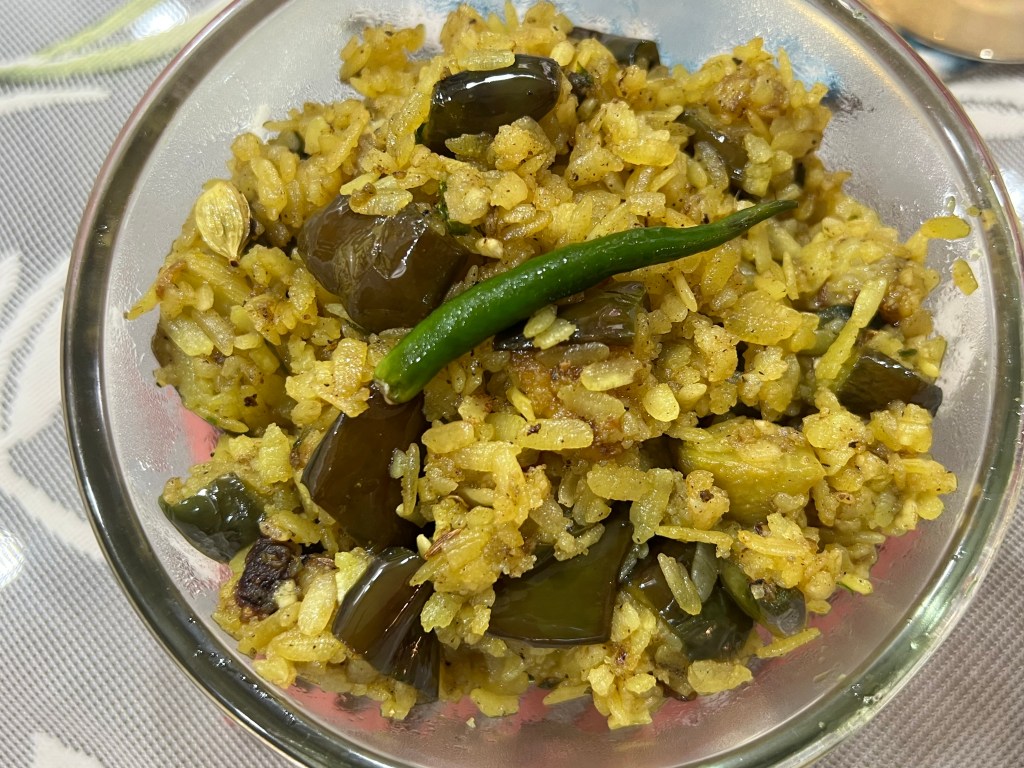
This dish carried me to a long lost place. It reminded me of my dida’s kitchen; of an unhurried, unassuming childhood, of long summer holidays in an uninhibited age. Of sunlight streaming through her kitchen windows, catching on tiny dust particles that seemed to float endlessly in the air. The kind of moments you don’t realise you’re storing away, until something as simple as a plate of chn’ire begun brings them rushing back.
More than anything, Chn’ire Begun is a reminder. That food doesn’t always need complexity to be meaningful. That comfort can come from the most unassuming combinations. And that sometimes, the dishes we return to are the ones that never tried too hard in the first place.
If you make this, take your time with it. Let the aromas guide you. And maybe, just maybe, it will remind you of something too.
Thank you for this one, Mishi!
 Nuchi Nebu Nonka
Leave a Reply