
Of home, cooking, and stories
Home, for me, never started with walls. It inevitably started with a smell. Not a particular one though.
That faint, comforting smell of either a phoron or a vegetable or fish being fried in mustard oil before dawn. The sound of a ‘khunti’ clinking against the ‘koda’. Ma calling out from the kitchen, half-scolding, half-singing. The hiss of the pressure cooker that somehow timed itself with the morning news.
That was home. That, and the chaos that came with it.
I grew up in a house that was never quiet. Well, with 16 people in one house, it is the happy normal. And in the middle of all that noise, there was always food. Simple, everyday food — bhaat, dal, some aloo bhaja — but somehow, it always felt like a celebration.
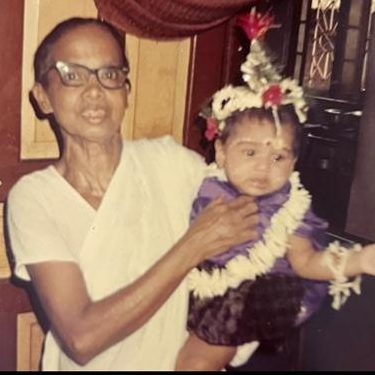
I remember buri pishi – a forever elderly woman who was our 24×7 help. I don’t know if she had a family that she would visit ever. As far as my memory serves me, she lived with us until her passing. Buri pishi and her pronunciation was my daily source of entertainment. Her slightly bowed gait, her white saree, her stinky greasy pillow, her tobacco, her betel leaf stained teeth, her extremely hoarse and loud voice still dances in my memories. I clearly remember she would wake up before dawn and begin her day – her silence quietly carrying her stories. It is her ghoti like colloquial pronunciation that has stayed with me to this day.
If you’ve grown up around Ghotis — the old Calcutta families from this side of Bengal — you’d know language always came with a twist of affection. We had our own rhythm, our own music in speech. Words softened and bent the way they wanted to.
Luchi quietly became nuchi.
Lebu turned into nebu.
Lonka became nonka.
It wasn’t a mistake — it was identity. That gentle lilt, that small mispronunciation, held the warmth of familiarity. You’d hear it echoing in kitchens, between mouthfuls, between scoldings. And even now, when I hear someone say “nuchi khabi?” — something inside me softens. Because language, like food, has a smell. And this one smells of home.

Dida used to say, “ranna mon diye shuru, mon diye shesh, majhe shudhu moshlapati.”
She’d cook with her eyes more than her hands — never measuring, never hurrying. And somehow, it was always perfect. Ma was different. She liked things neat, balanced, proper. But when the two of them cooked together, the whole house smelt like patience. And now, Ma somehow cooks exactly like dida used to – with her eyes, more than her hands.
Sundays had their own heartbeat. The morning sun slanted into the rawk, Dadu sitting outside and reading the newspaper while Jethu being cranky that he’s not had the chance to get hold of it. Baba would sleep in with me, playing and telling me stories. Mostly of his treks. While Jamma washed veggies at the basin by the kitchen window, the smell of begun bhaja would wander through the rooms long before anyone was hungry. Breakfast was served – phulko luchi, shada aloo chochhori, and a homemade goja for the sweet tooth in me. Dida used to make sweets at home – rosogolla, pantua, malpoa, goja, sondesh, bonde – you name it and she had it in her ‘bhnarar ghor’. And by the time lunch was ready on a Sunday, there’d be more people than chairs, and everyone would still manage to fit. Almost always there would be random guests at home, and needless to say, unannounced. Sundays would be loud, filled with jokes, laughter, music, and endless chatter.
I think what I miss most is that slowness — the way time used to stretch around meals. No one ever ate alone. No one rushed. There was always a story before the second serving, always laughter between mouthfuls, and always, always, someone keeping an eye on your plate to see if you’d had enough.
Now, I cook alone. And sometimes, when the oil heats just right and the ‘phoron’ crackles the way it used to — for a moment, the years fall away. I can almost hear Dida’s voice from the other room,
saying, “noon ta bhalo kore makhiyechhish toh?”
Given I cannot go two days at a stretch without cooking, I think my kitchen has quietly become my ‘nuchi nebu nonka‘ — my own small world of smells, stories, and half-remembered recipes. And in that space — between the hiss of oil and the hum of memory — it feels like home again. Maybe not the one I left behind, but the one I carry — quietly, everywhere I go.


 Nuchi Nebu Nonka
Leave a Reply to Rusha Cancel reply