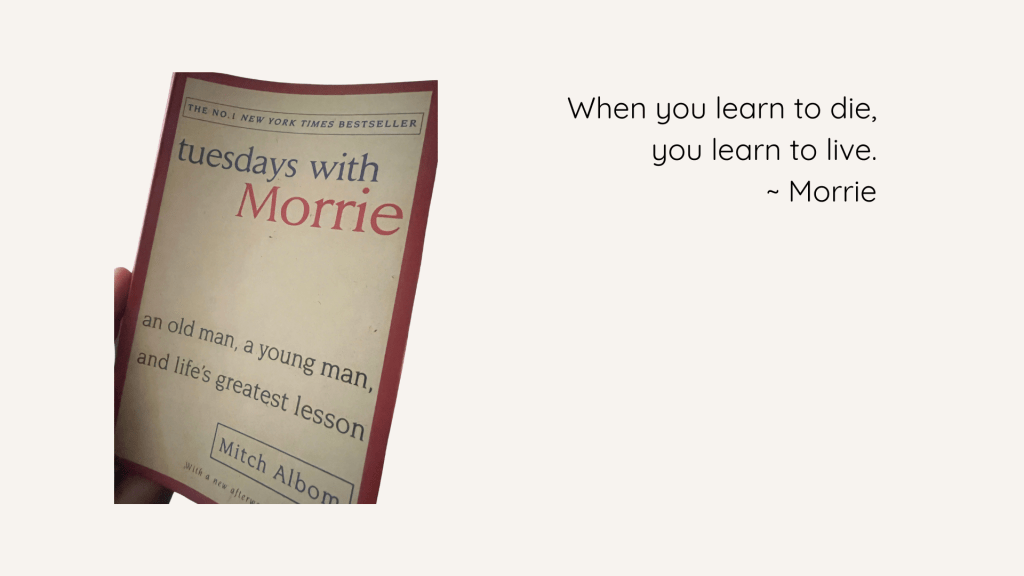
I used to be one of those kids who’d disappear into books so completely that the world around me ceased to exist. I would hide in the washroom for hours just to finish one more chapter (sometimes carrying our USHA stand-fan during summer afternoons). I’d even tuck a novel inside a textbook to outsmart the Mothership for a little longer (mostly getting caught – because, who could ever ACTUALLY outsmart Mothers?!). My report cards, unsurprisingly and quite evidently, bore the consequences of my secret literary affairs in red. But I have never been ashamed of them. If anything, I wear them like a strange sort of pride.
Then life happened, as it does. And somewhere along the way, a rogue little element called the smartphone entered my life and colonised my attention span with ruthless efficiency. And of course, I became addicted to the ritual of endless scrolling. Consuming everything and absorbing nothing. My concentration span deteriorated so spectacularly that comparing it to a Goldfish now feels unfair to the Goldfish. What once took me a day and sometimes two days, began taking me two months (at times even more). I cannot even remember the last book I devoured even during leisure days. But. That was until I stumbled upon Tuesdays with Morrie.
It did not take me weeks. Not even days, really. It took me few hours. Not 24. Not 12. Just a few stolen hours carelessly scattered across two impossibly busy days. Those of you who’ve read it would know what I mean. There are books that impress you. Some with their wit and humour, some with their flair of language and storytelling, some with their intensity of literature, and some with intelligence. Then there are books that are like an intravenous dose of an ache. Tuesdays with Morrie belongs to the latter. I don’t think I read it. I devoured it and mourned through it. Well, I still am mourning it and carrying it on like an afterthought like one does carry the lingering scent of incense, camphor, and tuberose after a funeral – tender yet impossible to shake off. Like I carry my old self, the one who was before she became who I am today.
Some books enlighten you. Some make you happy. Some make you sad. But Tuesdays with Morrie, devastated me. It is not your familiar devastation. I have cried, howled, smiled, laughed, hoped, lived a bit of joy – I have done it all through this particular devastation. What makes the book devastating is not the impending death itself. But, the unbearable and aching gentleness with which Morrie approaches it. In school, during literature classes, we were often taught to admire grand tragedies – wars swallowing entire civilisations, kingdoms collapsing, lovers facing brutal death (I am sure you’re able to picture some piece of literature with each one of these examples). But here, the tragedy is finite (Or is it?) and intimate. An old professor, lapped in his daily chair, frail from a betraying body – yet more alive than most of us who are rushing through life’s daily chronicles. That broke something inside me. The contradiction. The juxtaposition.
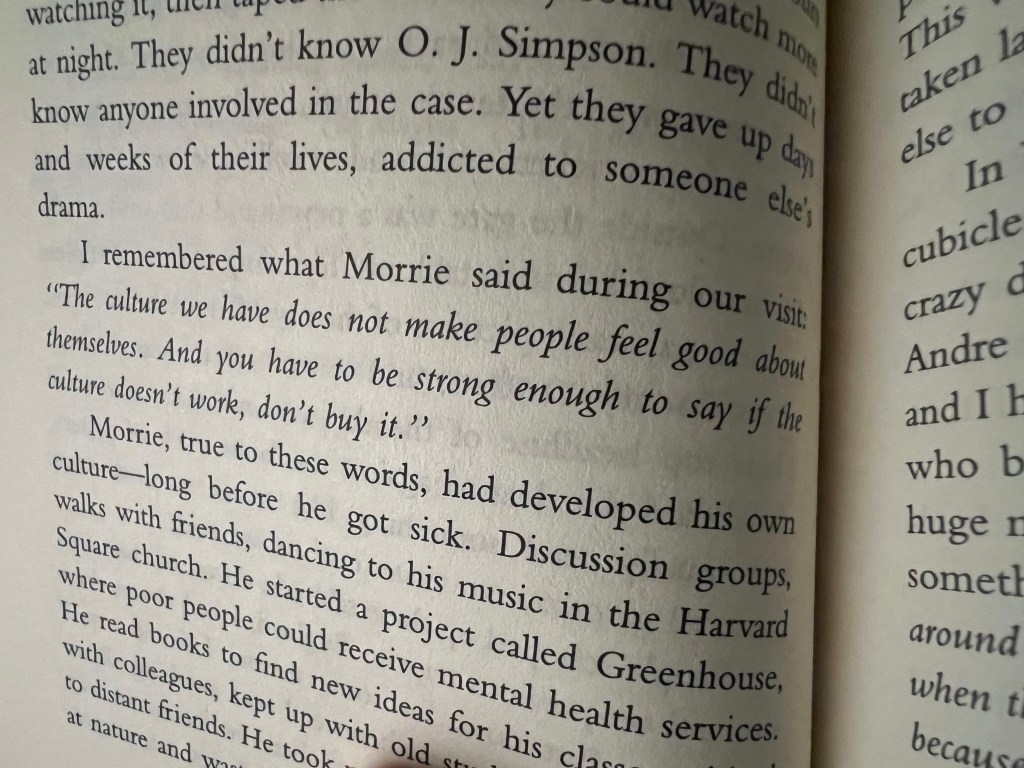
Morrie is not a showbiz philosopher. Neither does he talk their lines. And perhaps, that is why he feels greater than one. His wisdom is disarmingly simple, as also it is embarrassingly human – “When you learn to die, you learn to live.” The older I grow, the more I realise that the most profound truths are often the least ornamental. And Mitch Albom – writes with a certain restrain. Almost like walking on eggshells – too careful to not dwell on sorrow in his narrative of Morrie’s journey to death. This makes the book ache even more. He also does not care to overcrowd the narrative with literary vanity. The prose feels like I am sitting beside a beloved one at dusk while they talk about the things they wish they had understood earlier in life. There is also an almost sacred softness to the conversations between Mitch and Morrie. Sometimes a teacher and student, a dying man and a terrified witness, father and son, but mostly Tuesday people. Friends, for whom every Tuesday becomes less of a meeting and more of a slow farewell to life and youth.
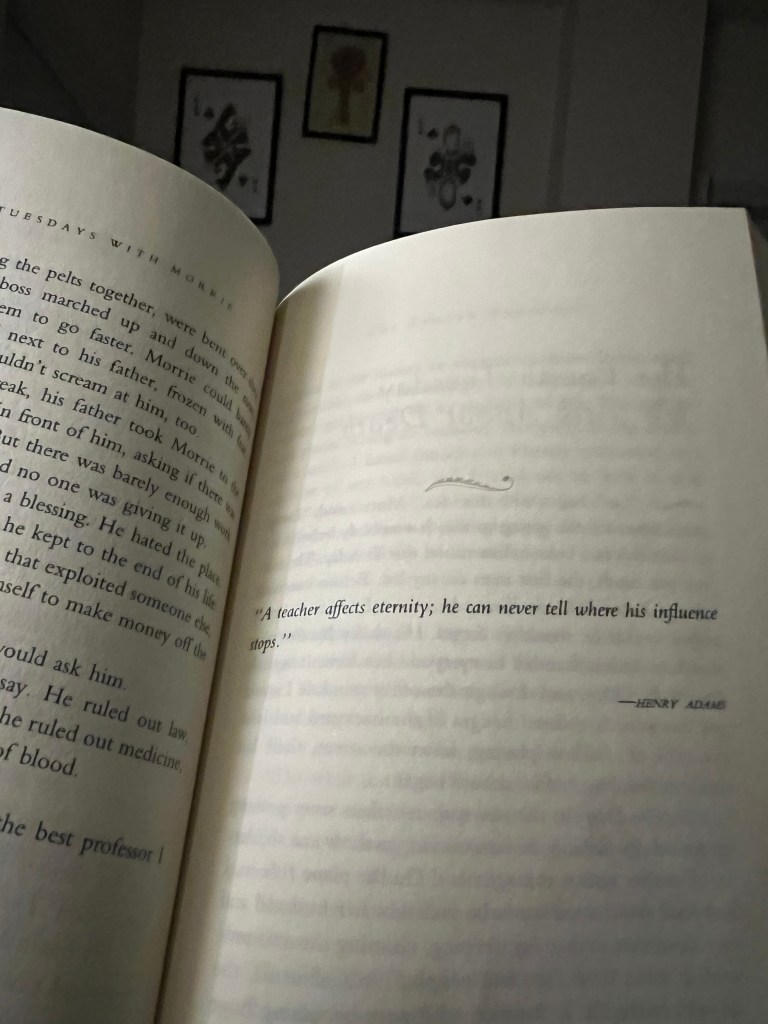
The book, very organically, in broad daylight, exposes the violence of modern living. That unsettles me the most. But it also made that inner ‘me’ happy. The one who always wants to run away from this ceremonial event called ‘life as we know it’ and seeks refuge in peace. As a societal construct, we are constantly taught to outrun silence. Mainly to monetise ourselves. But also to ‘perform’ happiness, to keep moving (lest we confront the terrifying brevity of existence). Morrie, confined to a chair, paradoxically becomes free’er than everyone around him. That is precisely because he has stopped pretending that life is endless. The dignity in that acceptance is extraordinary.
I think the reason this book devastates me and many readers like me because in our subconscious, Morrie resembles the people we fear losing. It could be an aging parent, a beloved teacher, a grandparent whose voice has probably begun to tremble and whose hands shake. While reading, I tried too hard to keep aside multitudes of thoughts penetrating into my mind – but failed miserably. I kept thinking of the conversations that I keep postponing assuming there will be another Tuesday. The book forced me to confront the horrifying possibility that one day there won’t be the Tuesday I keep thinking of. I cried quite a few times during Morrie’s almost dying days. But, by the final pages, my tears weren’t solely because Morrie was dying, but I realised how poorly we love while people are still here, around us, with us. How often we choose ego over tenderness, distraction over presence, speed over meaning. And may be, just may be, that IS the cruelest grief of all.
Some books entertain you for a while. You remember them fondly. But this one – this one rearranges your carbon structure.


Leave a Reply