There are dishes you grow up with. They’re woven into your childhood, your family, your festivals. You don’t remember the first time you ate them because they’ve simply always existed.
And then there are dishes life throws at you much later. You don’t get much of a choice. You either learn to live with them, or spend the next few years complaining about them.
Some grow on you. Some never do.
And then there are the rare few that quietly climb the ranks to become favourites.
Kadhi chawal is one of those.
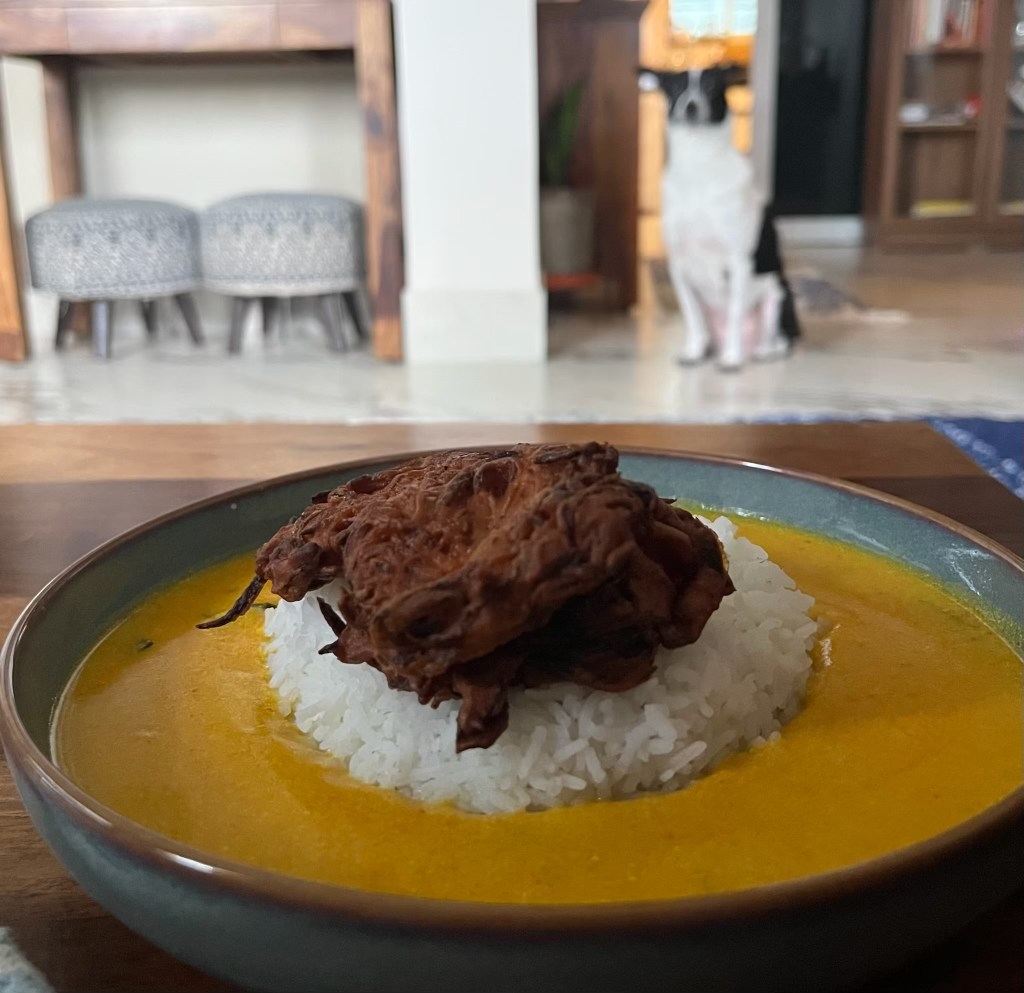
It didn’t come wrapped in Sunday lunches or recipes passed down through generations. There was no nostalgic backstory. It entered my life in the least glamorous way possible – Tuesday lunches at my college hostel in Bengaluru. Every Tuesday, without fail, there it was. A steel plate, a mound of rice and blobs of pale yellow kadhi generously poured over it.
I wasn’t impressed.
To someone raised on mustard, posto, mutton, fish, etcetera etcetera, this yoghurt-based curry looked suspicious. Slightly undercooked. Mild to the point of confusion. And, if I’m being completely honest, a little funny.
But hostel life has a funnier way of changing your relationship with food. You stop looking for excitement and start appreciating familiarity. The meals that show up every week become anchors. Somewhere between deadlines, homesickness that arrived unannounced, and counting the days until the next trip back to home, kadhi chawal quietly stopped being that Tuesday lunch and became something I genuinely looked forward to.
Not because it reminded me of home. Because, in its own strange way, it became one. Even today, it’s one of my home-away-from-home comfort meals. Not the only one, but definitely one I find myself reaching for on days when life feels unnecessarily loud. A bowl of warm rice, silky kadhi and something crisp on the side is usually enough to make the world seem a little less dramatic.
That crisp something? Onion fritters. Or, as every Bengali instinctively calls them, peyanji. Different geography. Different name. Same glorious idea.
Now, I know kadhi usually comes with pakoras dunked straight into the curry. But I refuse. My fritters stay firmly on the side. A Bengali simply cannot be expected to eat soggy peyanji. There are limits. Non-negotiable ones.
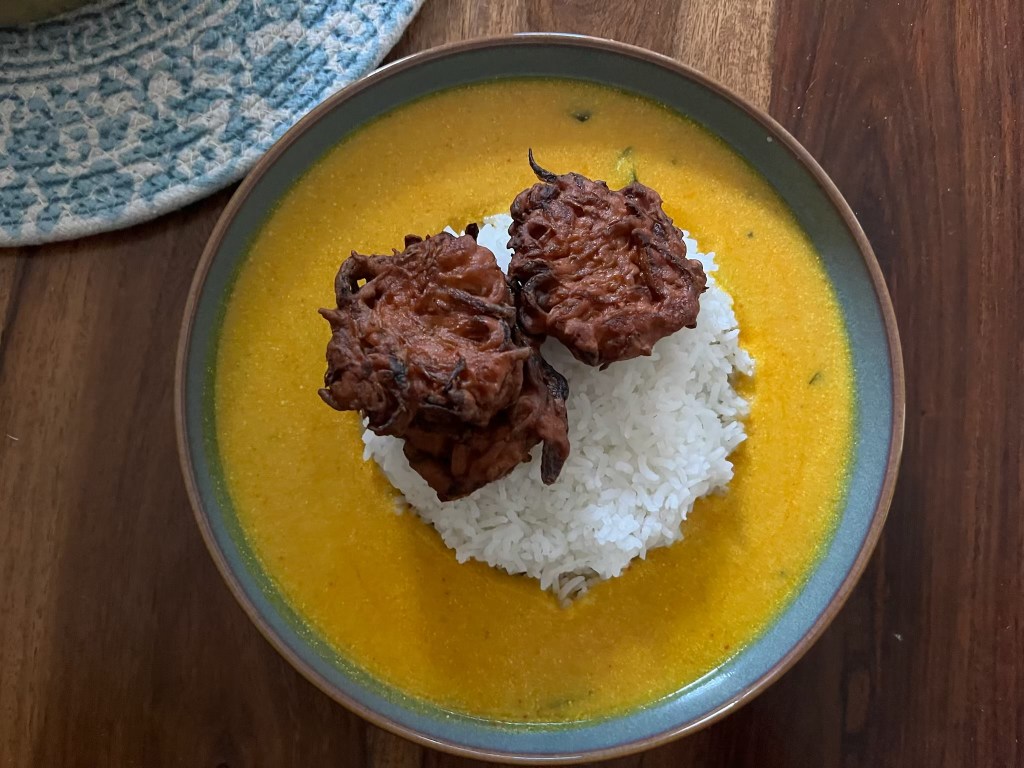
Thinly sliced onions, gram flour, green chillies and a handful of spices, fried until they’re wonderfully scraggly and crisp. Every spoonful of kadhi gets to decide how much crunch it deserves. Perhaps that’s just the Bengali in me refusing to compromise. I also love the coincidence of this plate. A North Indian kadhi. A Bengali peyanji. A hostel in Bengaluru. Three places. Three stories. One comfort meal.
Food has a remarkable way of doing that. It sneaks into your life when you least expect it and quietly starts feeling like it belongs. Before you know it, you’re making it in your own kitchen years later, not because you have to, but because you want to. And every single time I do, I’m reminded that not all comfort comes from childhood. Sometimes it comes from a city that became home for a while. Sometimes it comes from a Tuesday hostel lunch you were convinced you’d never enjoy.
And sometimes, it comes with a side of crispy peyanji that absolutely, under no circumstances, is allowed anywhere near the kadhi until the very last second.
 Nuchi Nebu Nonka
Leave a Reply